Mushrooms on Trees - What Do I Do?
You should be concerned when you see mushrooms growing on a tree. Once fungi appear on a trunk or near roots, questions about safety, liability, and long-term tree health require immediate answers. Many people ignore this warning sign, assuming mushrooms are harmless surface growth. Knowing what mushroom growth actually represents can help you act quickly, reduce risk, and protect surrounding trees, structures, and people.
mushrooms growing on trees and roots
New Image Tree Solutions gathered information about tree fungi, mushroom growth, arborist evaluations, and proper response strategies to help property owners understand why mushrooms appear, what urgency they represent, and how professional care can prevent serious damage or dangerous failure.
Key Takeaways for Mushrooms Growing On Trees
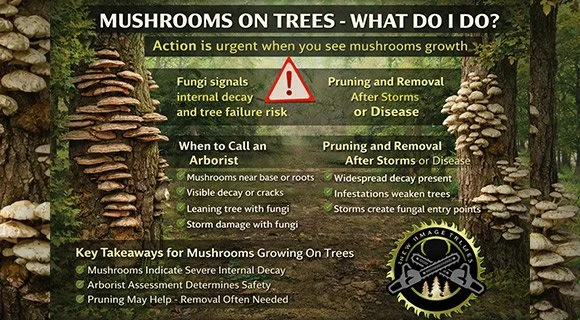
mushrooms growing on trees and roots information
Mushrooms growing on trees serve as clear biological indicators rather than surface problems. Fungal organisms do not randomly appear on healthy trees. They emerge when internal conditions support decay. Understanding this process helps property owners respond with urgency rather than hesitation.
Tree fungi consume structural components that allow trees to stand upright and resist environmental stress. Once mushrooms are visible, decay has often progressed beyond early stages. (This is why visual growth should always prompt professional evaluation rather than home remedies or observational delays.)
Early arborist involvement creates options. Some trees with limited decay can remain standing through targeted pruning, soil improvement, and load reduction. However, when fungi compromise roots or main trunks, safety becomes priority. Waiting for visible decline often leads to sudden failure events that cause property damage or injury.
Storm exposure increases fungal risk significantly. Even minor wind events can open pathways for decay organisms. Monitoring trees after storms reduces long-term consequences. Infestations also weaken defense systems, making fungal colonization easier.
Tree removal decisions should rely on professional assessment rather than fear. Arborists evaluate tree species, decay pattern, site conditions, and failure probability. This approach prevents unnecessary loss and ensures safety.
New Image Tree Solutions helps property owners navigate these decisions with clarity. Their experience with fungal decay allows accurate diagnosis and responsible action. Addressing mushroom growth early protects landscapes, prevents liability, and preserves tree value whenever possible.
Ignoring mushroom growth leads to predictable outcomes. Decay progresses silently until failure occurs. Responding promptly shifts control back to property owners and supports more secure, healthier outdoor spaces.
Why Mushrooms Grow on Trees
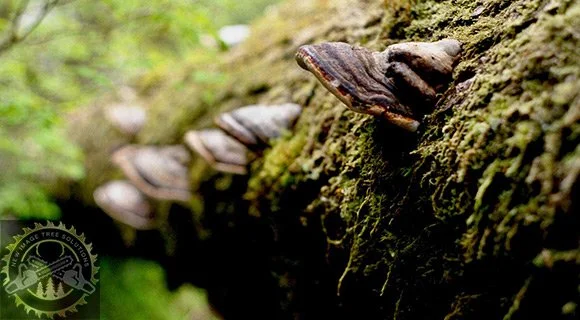
mushrooms flourishing on trees and roots
Mushrooms grow on trees because the internal wood tissue is already decaying. Fungi feed on dead or dying organic material, and trees provide a rich food source when compromised by stress, injury, or disease. While mushrooms appear outside, fungal colonization typically exists deep inside the trunk or root systems long before fruiting bodies emerge.
Common causes of fungal growth include: soil compaction, root damage, storm injury, improper pruning, drought stress, construction impact, and pest infestation. Once fungi establish themselves in wood fibers, a tree's structural integrity will decline. This means mushrooms are not cosmetic issues. They indicate advanced internal decay.
What Mushroom Growth Really Means
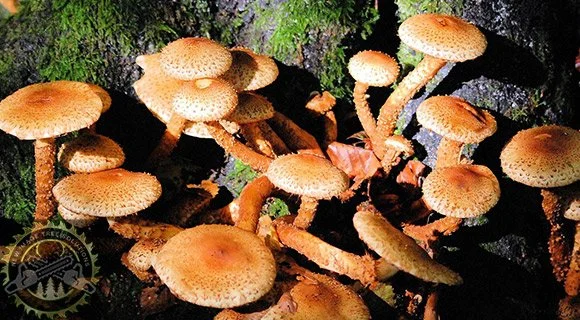
mushrooms growing on decaying trees and roots
Mushrooms signal that a tree has lost internal integrity. Fungi break down cellulose and lignin, which are essential for load-bearing strength. As this process advances, trees become vulnerable to splitting, uprooting, or sudden limb failure.
In many cases, mushrooms appear near a base or root flare. This location often suggests root rot, which severely compromises anchoring ability. A tree with root decay may fall even during mild wind or rain events, creating serious safety hazards.
Why Mushroom Growth Is Urgent
Mushroom growth means decay has reached a visible stage. At this point, waiting increases risk. Trees with advanced fungal activity may fail without warning, especially near homes, driveways, sidewalks, or power lines. Immediate assessment helps determine whether pruning, treatment, or full removal is required.
When to Call an Arborist for Help
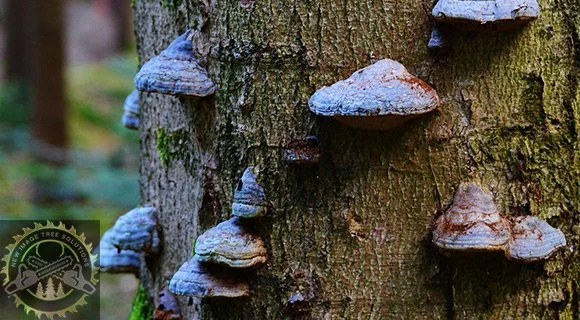
mushroom conks growing on trees and roots
Calling an arborist becomes essential when mushrooms appear on any living tree. Certified arborists evaluate tree stability, the extent of decay, species tolerance, and surrounding risk factors. Situations that require immediate professional evaluation include:
Mushrooms growing at the base or root zone
Fungal shelves emerging from trunk wounds
Leaning trees combined with mushroom growth
Cracks, cavities, or hollow sounds when tapped
Recent storm exposure with visible fungi
When in doubt about tree removal, an arborist can provide clarity (delaying evaluation often increases damage scope and cost).
Read more about arborists and what they do.
Why Call New Image Tree Solutions 404-680-0041
mushrooms growing on trees and roots arborist services
New Image Tree Solutions specializes in tree health assessments, hazard evaluations, and responsible tree removal. Their arborist-led team understands how fungal decay affects different species and uses proven diagnostic techniques to determine risk level.
Property owners rely on New Image Tree Solutions for accurate recommendations rather than unnecessary removals. When trees can be preserved safely through pruning or monitoring, that guidance is provided. When removal becomes necessary, work is performed efficiently and safely with minimal disruption to the landscape.
Pruning and Removal After Storms, Infestations, or Disease
Trees exposed to storms often suffer hidden injuries. Broken bark, cracked limbs, and root movement create entry points for fungi. Mushroom growth following storms usually indicates internal damage that developed rapidly.
Infestations also weaken trees. Insects disrupt nutrient flow and introduce pathogens. Fungi often follow these stressors, accelerating decline.
Examples When Tree Removal Is Needed Due to Disease and Mushrooms
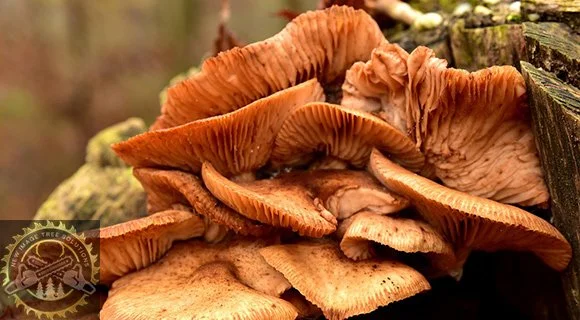
fungi growing on trees and roots
Widespread fungal growth along the trunk length
Conks or shelf fungi indicate heartwood decay
Mushrooms combined with canopy dieback
Advanced root rot compromises stability
Multiple fungal species are present simultaneously
In these cases, removal protects nearby structures and prevents damage to surrounding healthy trees.
Are Mushrooms on Trees Bad?
This article explained why mushrooms grow on trees, what fungal growth reveals about internal decay, and why urgent action matters. You learned when to call an arborist, how storms and infestations contribute to decay, and how professional guidance protects property and people.
Acting on this information leads to safer landscapes, reduced liability, and informed decisions about tree care. Early evaluation helps preserve trees when possible and prevents sudden, hazardous failures.
Ignoring mushroom growth allows decay to advance unchecked. This increases risk, repair costs, and potential damage. Trees rarely recover once fungi have established internally. Awareness and action remain the strongest tools for protecting your property.
Sources:
edmondok.gov/1159/The-Meaning-Behind-the-Mushrooms
site.extension.uga.edu/bartow/mushrooms-on-trees
hnr.k-state.edu/extension/horticulture-resource-center/common-pest-problems/documents/Trees%20with%20Mushroom%20Growth.pdf
Check out this article about 5 Lethal Tree Diseases in Roswell, Georgia
(404) 680-0041