Tree Pruning and Removal Equipment
Are you worried about a declining, storm-damaged, or overgrown tree on your property? Understanding the types of tree pruning and removal equipment professionals rely on can help you make informed decisions and avoid costly mistakes that come from attempting dangerous tree work without the correct tools or experience.
tree pruning and removal equipment
New Image Tree Solutions gathered information about the essential tools and machinery arborists use to safely prune, remove, and dispose of trees and stumps. Knowing how professionals handle tree maintenance and removal helps property owners recognize when it’s time to call an expert, ensuring that each job is done safely, efficiently, and with minimal impact to the surrounding landscape.
Hand-Held Pruning Equipment
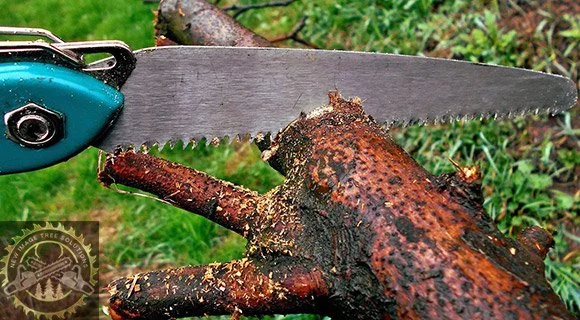
tree pruning and removal equipment handheld saw
Professional arborists rely on a variety of hand-held tools for precision pruning and shaping. These tools allow for clean, controlled cuts that promote healthy tree growth. Hand pruners are used to trim small branches and twigs, while loppers have extended handles for reaching higher limbs. Pruning saws handle thicker branches that can’t be cut with pruners, and their sharp, curved blades provide accuracy and control. For more extensive pruning, pole saws and telescoping pruners extend reach without the need for a ladder, ensuring that trimming can be done safely from the ground.
Proper pruning requires more than just cutting away branches (Arborists consider factors such as branch structure, growth direction, and proximity to power lines or structures). Using sharp, well-maintained tools prevents tearing or splitting, which can expose trees to infection or decay.
Heavy-Duty Tree Removal Equipment
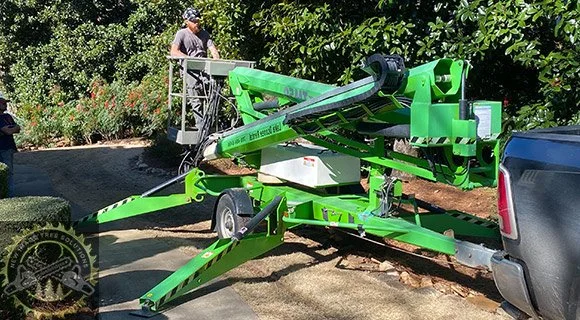
tree pruning and removal equipment lift with cherry picker
When dealing with large trees or significant structural damage, arborists rely on specialized machinery to safely dismantle and remove them. Chainsaws are essential for efficiently cutting through thick trunks and large branches. Professionals utilize different-sized chainsaws, depending on tree diameter and height (for maximum control during cutting operations).
For larger or more complex removals, cranes are used to lift heavy tree sections away from structures, reducing the risk of falling debris. Crane-assisted tree removal is especially valuable in tight spaces or urban environments where precision is critical. Arborists trained in rigging techniques use ropes, pulleys, and harnesses to guide large branches safely to the ground.
Once a tree is down, wood chippers come into play. These machines process large branches and trunks into mulch, reducing the debris and allowing for easy transport or reuse in landscaping. Stump grinders are another key piece of equipment. After removal, the stump grinder shreds the remaining base of the tree into wood chips, leaving the ground level and ready for new growth or hardscape installation.
Watch this video to see the final cuts on a massive tree removal job.
Final chainsaw cuts on the removal of a massive tree
When to Call an Arborist
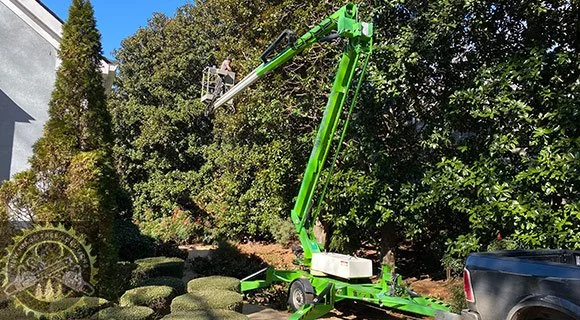
tree pruning and removal equipment heavy duty lift
It’s time to call an arborist when trees show visible signs of stress or structural issues. Cracks in the trunk, dead limbs, excessive leaning, or fungal growth are all indicators that professional evaluation is needed. After severe weather events such as heavy winds, ice storms, or lightning strikes, an arborist can inspect trees for hidden damage that could lead to future hazards.
Homeowners should also seek professional help for trees showing signs of disease or pest infestation. Early intervention can save a tree, while neglect often leads to irreversible damage. Arborists trained in plant pathology can diagnose issues and recommend proper treatments, pruning methods, or removals when necessary.
Read more about ISA Certified Arborist activities and responsibilities at newimagetreesolutions.com/blog/arborist-a-complete-definition
Regular Pruning and Maintenance
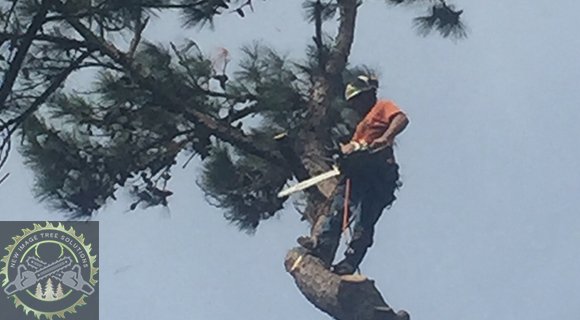
tree pruning and removal equipment harnesses and chainsaw
Consistent tree and shrub maintenance promotes healthy growth and reduces risks. Arborists recommend pruning during dormant seasons to encourage growth in spring and to make cuts easier to heal. Trees near roofs, power lines, or walkways should be inspected regularly to remove weak or overextended limbs.
Routine trimming enhances sunlight penetration and airflow through canopies, preventing fungal growth and improving plant health. Maintenance also keeps landscapes looking neat and prevents trees from becoming top-heavy or uneven - conditions that increase the likelihood of toppling during strong winds.
Why Hire New Image Tree Solutions
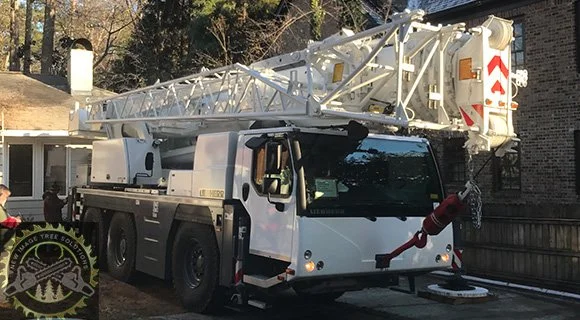
tree pruning and removal equipment heavy duty crane
Hiring a professional team like New Image Tree Solutions ensures that tree care is performed safely, effectively, and in compliance with local guidelines. Their arborist-led crews are experts at evaluating tree health, identifying structural weaknesses, and recommending the best course of action for long-term stability.
Using advanced equipment (cranes, aerial lifts, and stump grinders), the team can handle even the most complex tree removal and pruning tasks with precision. They prioritize property protection, ensuring nearby structures, landscapes, and utilities remain unharmed during operations.
Beyond technical skills, New Image Tree Solutions is committed to environmentally responsible practices. All organic waste is processed for reuse whenever possible, turning removed branches and stumps into mulch that benefits future plant growth.
Key Considerations for Tree Pruning and Removal Equipment
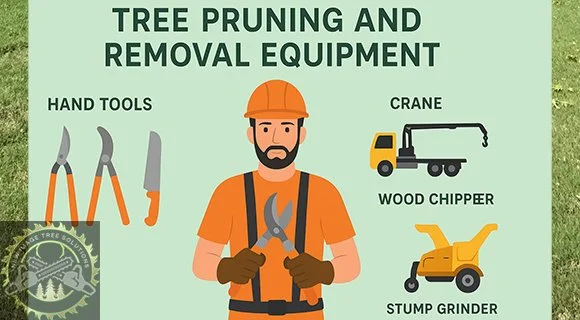
tree pruning and removal equipment information
Choosing the right equipment is essential for both safety and effectiveness in any tree care operation. Each piece of equipment serves a specific purpose, and understanding those roles helps ensure the best results.
1. Safety First
Tree pruning and removal are among the most hazardous maintenance tasks on a property. Hand-held tools should always be kept sharp and clean to prevent slips and injuries. Power equipment (chainsaws and stump grinders) should only be operated by trained professionals familiar with safety protocols, including helmet, glove, and protective eyewear use.
2. Proper Equipment for Tree Size and Type
Different trees require different approaches. Smaller ornamental trees might only need pruners and pole saws, while mature hardwoods require cranes and high-capacity chippers. Misjudging equipment size can lead to property damage or personal injury.
3. Timing Matters
The timing of pruning impacts tree recovery and growth. Dormant season pruning reduces stress and helps wounds seal faster. However, removal due to disease or infestation should happen immediately to prevent spread.
4. Environmental Considerations
Responsible arborists take care to minimize soil compaction, avoid damage to nearby plants, and recycle organic material. Using low-impact machinery or cranes when necessary helps preserve surrounding landscapes.
5. When in Doubt, Hire a Professional
Even with access to rental equipment, tree removal and heavy pruning are best handled by certified arborists. They bring not only specialized tools but also the knowledge to assess each situation safely and efficiently.
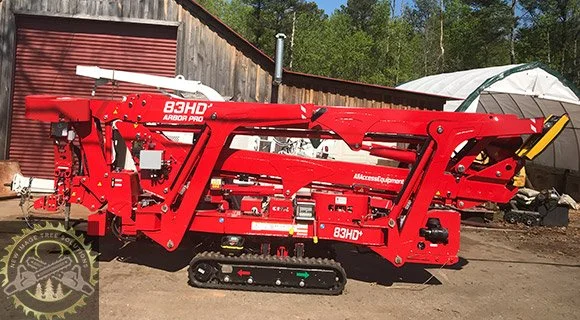
tree pruning and removal equipment scissor lift
Tree Care and Removal Equipment
In this article, you discovered how arborists use a range of pruning and removal equipment to maintain tree health, prevent hazards, and manage property aesthetics. From hand tools like pruners and saws to heavy machinery such as cranes and stump grinders, each piece plays an essential role in professional tree care.
When you trust professionals like New Image Tree Solutions, you gain peace of mind knowing your trees are managed safely, efficiently, and with the environment in mind. Regular maintenance reduces risks during storms, enhances curb appeal, and promotes a healthy landscape.
By ignoring the need for professional tree maintenance or attempting complex removals without the proper tools, you risk injuries, costly damage, or loss of valuable landscape features. Taking a proactive approach ensures your trees remain assets, not liabilities, to your property.
Sources:
extension.umn.edu/planting-and-growing-guides/how-hire-tree-care-professional
site.extension.uga.edu/fultonag/2024/02/4-common-pruning-tools
(404) 680-0041