Tree Removal Permit - Sandy Springs, Georgia
Sandy Springs, Georgia sits just north of Atlanta along Chattahoochee River and features rolling terrain, mature hardwood forests, and established residential neighborhoods. Incorporated in 2005, this vibrant city blends commercial corridors with quiet suburban communities shaded by oak, pine, and maple canopies. Tree preservation plays a central role in maintaining property values, neighborhood aesthetics, and environmental stability throughout Sandy Springs.
Located within USDA Plant Hardiness Zone 8a, Sandy Springs experiences long, humid summers and relatively mild winters. Average summer highs often reach low to mid 90s, while winter lows typically fall into low 30s. Annual rainfall averages more than 50 inches, contributing to dense vegetation growth. Seasonal thunderstorms, occasional ice events, and saturated soil conditions frequently lead to fallen limbs, leaning trunks, and hazardous tree conditions that prompt homeowners to consider removal.
tree removal permit sandy springs georgia
New Image Tree Solutions gathered essential tree permit information about Sandy Springs tree removal requirements, arborist oversight, protected tree classifications, and municipal procedures so property owners can make informed decisions before cutting or pruning regulated trees. Understanding these guidelines protects homeowners from costly penalties while preserving community tree canopy.
Sandy Springs Tree Removal Permit Requirements
Tree removal within Sandy Springs is regulated through Community Development Department under city tree protection ordinance. Regulations are designed to preserve healthy canopy coverage while allowing reasonable property improvements and safety-related removals.
Tree Removal Permit for Live Tree Removal
(You will be required to login or create an online profile)
Tree Removal Permit for Suspected Dead, Dying or Hazardous (DDH) Trees
When a Tree Removal Permit Is Required
In most residential cases, a permit is required when:
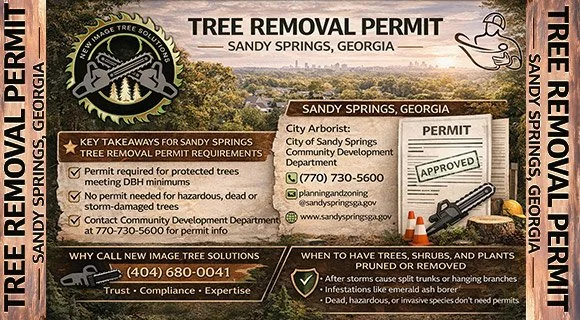
Removing protected trees that meet minimum diameter at breast height - DBH - thresholds defined by city code
Clearing trees for construction, grading, driveway installation, or home additions
Removing specimen trees or heritage trees identified by ordinance
Conducting land disturbance activities tied to building permits
Removing multiple trees within a single project scope
Protected tree classification generally depends on trunk diameter measured at 4.5 feet above ground. Hardwood species often fall under stricter diameter requirements than softwoods. Replacement or recompense planting may be mandated when protected trees are removed.
Permit applications typically require:
Tree survey or site plan
DBH measurements
Species identification
Reason for removal
Replacement plan if applicable
When a Permit Is Not Required
Certain circumstances allow removal without formal permit approval:
Dead trees confirmed by inspection
Hazardous trees posing imminent risk to life or property
Storm-damaged trees with structural failure
Invasive species identified by city guidelines
Trees below minimum DBH thresholds
Even in exempt scenarios, documentation such as photographs or arborist verification may be recommended in case city review is later requested.
Sandy Springs City Arborist and Permit Contact Information
tree removal permit sandy springs georgia
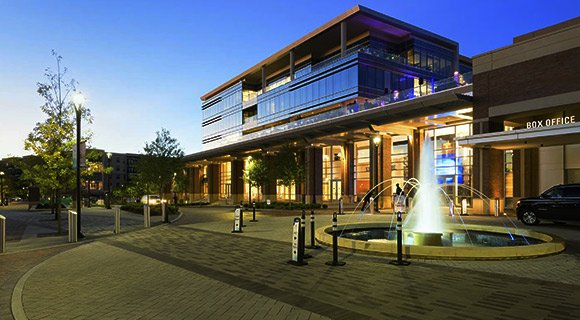
Tree removal permits and arborist review are administered by:
City of Sandy Springs - Community Development Department
1 Galambos Way
Sandy Springs, GA 30328
Phone: 770-730-5600
Website: sandyspringsga.gov
Email: planningandzoning@sandyspringsga.gov
Inspections
You can request inspections through the online permitting portal. If that’s not possible, you may:
• Email your request to inspections@sandyspringsga.gov and include your Permit Number, Project Address, Inspection Type, Contact Name, Phone Number, and Email.
• Call Kamaria George at 770-206-1424.
City arborist services are coordinated through Community Development and Planning divisions. Homeowners are encouraged to confirm DBH thresholds and protected species status prior to removal.
Tree Removal Permit for Live Tree Removal
(You will be required to login or create an online profile)
Tree Removal Permit for Suspected Dead, Dying or Hazardous (DDH) Trees
Key Takeaways for Sandy Springs Tree Removal Permit Requirements
tree removal permit sandy springs georgia
Understanding Sandy Springs tree ordinance protects homeowners from legal complications while preserving neighborhood canopy. Tree removal is not simply a landscaping decision - it is regulated land management activity governed by municipal code. Failure to comply can result in citations, fines, mandatory replanting, and delays in construction schedules.
First, determine whether tree qualifies as protected. Measure trunk diameter at 4.5 feet above ground to calculate DBH. Compare measurement against city thresholds for hardwood and softwood species. If tree exceeds minimum diameter, permit review is likely required unless exemption applies.
Second, evaluate tree condition carefully. Dead, storm-damaged, or hazardous trees often qualify for administrative exemption. However, burden of proof may rest with property owner. Photographs, arborist reports, and written assessments provide documentation in case city requests verification.
Third, any tree removal connected to building permit, grading activity, driveway expansion, or land disturbance typically requires prior approval. Site plans and tree surveys may be required during permit submission. Replacement planting or recompense payments may also apply depending on canopy impact.
Fourth, communication with Community Development Department is essential. City staff can clarify DBH limits, protected species classification, and exemption procedures. Early consultation prevents costly project interruptions.
Fifth, professional arborist involvement reduces compliance risk. Certified arborists understand structural defects, disease indicators, and municipal documentation standards. Their written evaluation can determine whether tree meets hazardous classification criteria.
Sixth, proactive maintenance reduces long-term permit complications. Pruning weak limbs before failure, monitoring pest activity, and removing small trees before they exceed protected diameter thresholds can prevent more complex regulatory processes later.
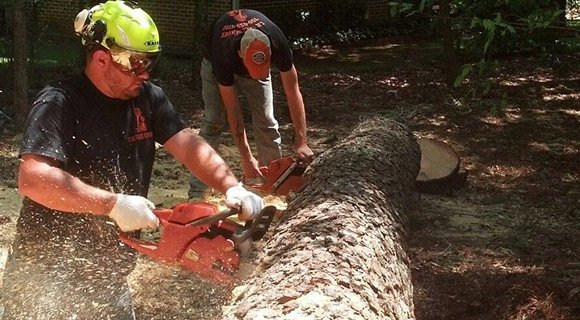
Finally, always prioritize safety. Large tree removals require specialized equipment and trained crews. Improper cutting can damage property, injure occupants, and create liability exposure. Working with experienced professionals ensures structural stability assessment, safe dismantling techniques, and proper debris disposal.
By approaching removal with informed planning and regulatory awareness, homeowners maintain compliance while protecting property value and community canopy.
When to Call an Arborist
If uncertainty exists regarding tree health, protected status, or structural stability, consulting a certified arborist is strongly advised. Situations that warrant professional evaluation include:
Visible trunk decay or fungal growth
Significant lean following heavy rainfall
Split trunks after wind events
Root plate lifting near foundation
Construction projects near root zones
Large limb overhang above structures
Arborists can assess risk levels, confirm whether tree qualifies as hazardous, and determine if permit exemption applies. Professional documentation strengthens compliance and protects homeowners during inspections.
Call New Image Tree Solutions (404) 680-0041
tree removal permit sandy springs georgia
New Image Tree Solutions provides expert guidance for Sandy Springs property owners navigating permit requirements and safe removal practices. Services include:
On-site DBH measurements
Species identification
Hazard evaluations
Permit application assistance
Emergency storm response
Crane-assisted removals
Stump grinding and site restoration
Knowledge of local ordinance ensures compliance with city regulations while minimizing project delays. Crews utilize modern rigging systems, protective ground mats, and industry-standard safety protocols to protect landscaping and surrounding structures.
When removal is required due to safety concerns or construction plans, New Image Tree Solutions coordinates documentation and helps streamline communication with Community Development staff. This proactive approach reduces risk of fines and stop-work orders.
Calling 404-680-0041 connects property owners with experienced professionals who streamline permit approval and execute removal with precision.
When to Have Trees, Shrubs, and Plants Pruned or Removed
Routine maintenance prevents many emergency removals. Property owners should evaluate trees annually, especially after severe weather.
Storm Damage
Thunderstorms and high winds frequently cause:
Broken scaffold limbs
Hanging branches
Cracked trunks
Root destabilization
Trees compromised by storms may qualify for permit exemption if immediate hazard exists.
Infestations
Invasive pests like the emerald ash borer and bark beetles can rapidly weaken tree structure. Signs include canopy thinning, exit holes, bark splitting, and woodpecker activity. Early removal may prevent spread to nearby trees.
Disease
Fungal infections, root rot, and vascular diseases often produce:
Mushrooms at trunk base
Large dead canopy sections
Hollow trunks
Progressive dieback
If the tree is clearly dead or poses safety threat, a permit may not be required. However, verification is recommended before cutting down protected specimens.
Sandy Springs Tree Removal Requirements
This article explained Sandy Springs tree removal permit requirements, defined when approval is required, identified exemptions for hazardous or dead trees, and provided contact details for Community Development Department. Guidance on arborist involvement and maintenance timing was also outlined to help property owners navigate local regulations.
Following these procedures results in safe removals, regulatory compliance, preserved property value, and reduced liability exposure. Homeowners gain peace of mind knowing tree work aligns with municipal standards while protecting landscape integrity.
Ignoring permit requirements can lead to fines, mandatory replanting, legal complications, and project delays. Unauthorized removal of protected trees may also damage neighborhood canopy and create preventable financial burden. Responsible planning ensures smooth project execution and long-term property protection.
Sources:
sandyspringsga.portal.opengov.com/categories/1086
arborday.org
(404) 680-0041