When Emergency Tree Removal Is Necessary
A damaged or unstable tree can quickly go from a landscaping concern to a serious safety hazard. After a storm, you may see a leaning trunk, broken limbs, or a tree resting against a roof and wonder whether it can wait. Knowing which situations require emergency tree removal can help you protect people, property, vehicles, utility lines, and surrounding landscaping while getting professional help.
tree removal emergency roswell georgia
New Image Tree Solutions gathered information on situations that may require emergency tree removal, warning signs that indicate a tree has become dangerous, and circumstances requiring an arborist. Storm damage, advanced age, infestations, disease, structural problems, and immediate threats can create situations needing professional evaluation or removal. If a fallen or damaged tree has caused structural or roof damage, contact New Image Roofing Atlanta at 404-680-0041 for assistance with the roofing or building damage after the tree hazard has been addressed.
Key Takeaways for Emergency Tree Removal
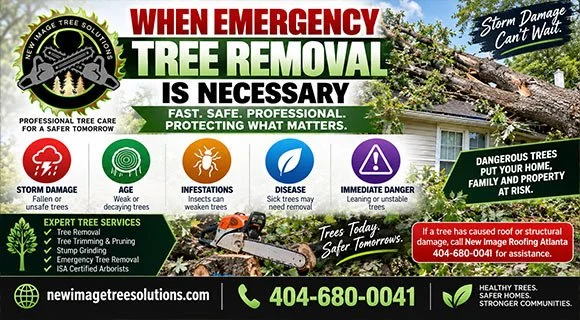
tree removal emergency roswell georgia information
Emergency tree removal is more than removing a tree that looks unattractive or unhealthy. It involves identifying conditions that create an immediate or developing threat to people or property. Knowing these warning signs can help you respond appropriately when a tree becomes dangerous.
1. Storm Damage Can Create Immediate Hazards
Severe thunderstorms, high winds, tornadoes, and other weather events can break large limbs, split trunks, uproot trees, or cause trees to lean dangerously. A damaged tree may remain standing while becoming significantly less stable.
Never assume a damaged tree is safe because it hasn't fallen. A professional arborist can evaluate structural damage and determine whether removal, pruning, or stabilization is appropriate.
2. A Tree Leaning Toward Property Requires Attention
A tree that suddenly develops a significant lean may have suffered root damage, soil movement, trunk failure, or structural weakness. Professional evaluation is quickly needed if it is leaning toward a house, garage, fence, driveway, roadway, or other occupied area.
A sudden change in a tree's position is particularly concerning after severe weather.
3. Broken Limbs Can Become Falling Hazards
Large broken branches suspended high within a tree are sometimes called widowmakers. These limbs can fall unexpectedly, potentially causing severe property damage or personal injury.
Do not attempt to climb a damaged tree or remove large elevated limbs yourself. Professional tree crews have specialized equipment and training for hazardous conditions.
4. Root Damage Can Make a Tree Unstable
Roots provide critical support. Construction activity, excavation, erosion, saturated soil, disease, or severe storms can damage or weaken a tree's root system.
Visible roots, lifted soil around a trunk, exposed root plates, or a tree that appears to be pulling away from surrounding soil can indicate serious instability.
5. Disease Can Lead to Structural Failure
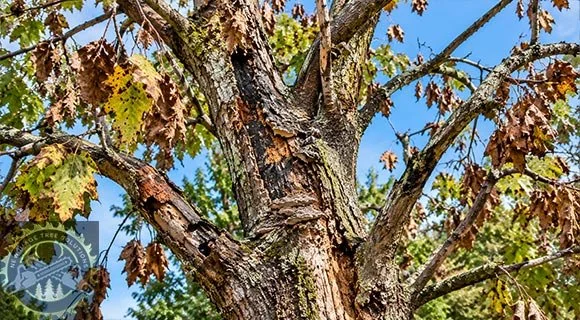
diseased dying tree removal emergency roswell georgia
Certain tree diseases can weaken branches, trunks, or root systems. Signs may include extensive decay, fungal growth, dead sections, abnormal growth, cavities, extensive dieback, or large areas where bark has deteriorated.
Not every diseased tree requires removal. An arborist should evaluate the severity and location of disease. However, advanced disease combined with significant structural deterioration may require removal.
6. Infestations Can Weaken Trees
Insects and other pests can damage trees by feeding beneath bark, boring into trunks, attacking branches, or disrupting vascular systems. Serious infestations can contribute to decline and structural weakness.
Examples include trees showing extensive boring activity, galleries beneath loose bark, significant canopy decline, or widespread branch dieback. An arborist can identify potential pest problems and determine whether treatment, pruning, monitoring, or removal is appropriate.
7. Dead Trees Can Become Dangerous
A completely dead tree no longer has living tissue supporting normal growth and defense mechanisms. As decay progresses, branches and sections of the trunk can become increasingly brittle.
A dead tree near a home, playground, driveway, sidewalk, or other frequently occupied location deserves prompt professional attention. Removal may be necessary when structural stability has deteriorated significantly.
When To Have Trees and Shrubs Pruned or Removed
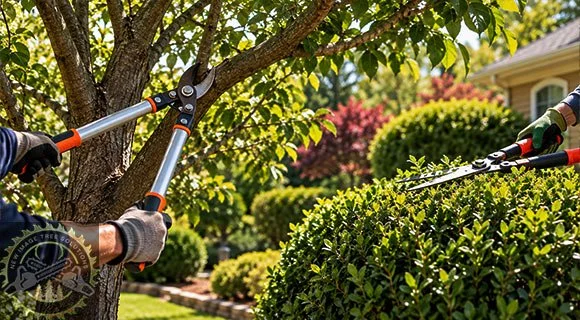
tree removal emergency roswell georgia pruning
Not every tree problem requires emergency removal. Some trees can be managed through routine pruning, treatment, monitoring, or structural support. Understanding when to prune and when to remove can prevent unnecessary work while improving safety.
Storms
After a major storm, inspect your landscape from a safe location. Look for broken branches, split trunks, exposed roots, hanging limbs, leaning trees, and trees that have fallen onto structures.
If a tree has fallen onto a house or building, keep people away until professionals can evaluate the situation. Trees can place significant weight on structures and may also interact with electrical systems.
Age
Age alone does not mean a tree must be removed. Many mature trees remain healthy and structurally sound for decades.
However, older trees can develop cavities, decay, dead limbs, weakened unions, root problems, or other structural concerns. Regular professional inspections can help determine whether an aging tree remains safe.
Disease
Disease may require removal if deterioration is extensive and the tree presents a risk. For example, a tree with severe trunk decay, extensive deadwood, compromised roots, and a declining canopy may no longer be structurally reliable.
An arborist should evaluate the tree before removal whenever circumstances permit.
Infestation
A tree with a serious insect infestation may sometimes be treated successfully. However, removal may become necessary when pest damage has caused extensive structural deterioration or when the tree poses a risk to nearby trees or property.
Early detection can provide more options. Regular inspections can help identify pest activity before damage becomes extensive.
Immediate Danger
Immediate danger is perhaps the clearest reason to seek emergency assistance. Examples include a tree resting against a house, a large limb suspended above a walkway, a severely split trunk, an uprooted tree leaning toward a building, or a damaged tree blocking an important access route.
Do not get under unstable limbs or attempt to cut a large damaged tree without professional equipment and experience.
When Should You Call an Arborist?
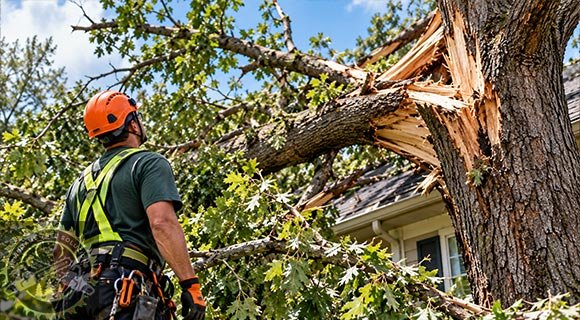
tree removal emergency roswell georgia arborist inspection
Call an arborist whenever you are uncertain about a tree's safety, health, or structural condition. Professional evaluation is particularly important when a tree is large, damaged, diseased, leaning, or located close to buildings and other valuable property.
Call an arborist when you notice:
A sudden change in tree position
Large dead or broken branches
Cracks or splits in a trunk
Significant cavities or decay
Exposed or damaged roots
Extensive fungal growth
Severe pest activity
Major canopy decline
Trees damaged by storms
Branches hanging over structures or high-use areas
A tree growing unusually close to a building
A tree that appears unstable
An arborist can evaluate conditions that may not be obvious from ground level and recommend an appropriate course of action.
Call New Image Tree Solutions at 404-680-0041
tree removal emergency experts roswell georgia
When a tree becomes hazardous, professional help can make the situation safer and easier to manage. New Image Tree Solutions provides tree services to address problems involving damaged, declining, overgrown, or hazardous trees.
Services may include tree removal, pruning, trimming, thinning, stump grinding, and emergency tree removal. Professional tree care helps property owners address immediate hazards while also protecting healthy trees through appropriate maintenance.
New Image Tree Solutions also works with ISA-certified arborists, providing professional knowledge of tree health and structural conditions.
If a tree appears unstable after a storm or you are concerned about disease, infestation, age, or structural weakness, call 404-680-0041 for assistance.
Why Emergency Tree Removal Should Not Be Delayed
A hazardous tree rarely becomes safer when ignored. Weather conditions can worsen an existing problem, while decay, disease, pests, and structural deterioration can continue to weaken a tree.
A damaged branch that remains attached after a storm can eventually fall. A leaning tree can become less stable as roots deteriorate or soil conditions change. A diseased tree can continue declining until removal becomes more complicated.
Professional evaluation gives you more information and additional options. In some cases, pruning or treatment can preserve a tree that might otherwise appear to require removal.
When removal is necessary, addressing the problem promptly can reduce any additional damage.
Protecting Your Property After Tree Damage
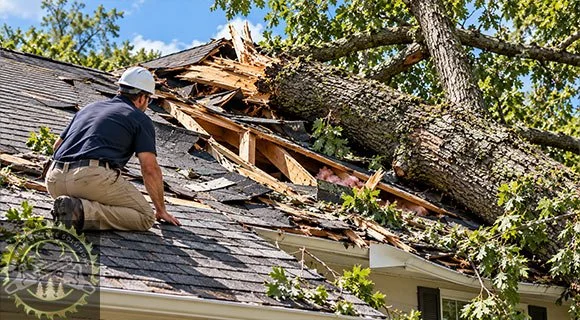
tree removal emergency roswell georgia roof inspection
When a tree falls onto a home or building, the tree itself may be only part of the problem. Roofing materials, gutters, siding, windows, framing, electrical components, and other structural elements may also suffer damage.
Don't assume that visible damage represents the entire problem. A professional inspection can identify areas for repair and help determine the next steps.
For roof damage caused by a fallen tree or storm event, contact New Image Roofing Atlanta at 404-680-0041. Addressing roofing damage promptly can help prevent additional water intrusion and related problems.
Remember that tree removal and building repairs are separate specialties. New Image Tree Solutions can address hazardous trees, while New Image Roofing Atlanta can evaluate and repair roofing damage.
Preventive Tree Care Can Reduce Emergency Problems
Emergency removal is sometimes unavoidable, but regular tree care can help identify developing problems before they become emergencies.
Routine inspections can uncover dead branches, disease symptoms, pest activity, structural weaknesses, and root problems. Pruning can remove hazardous limbs and improve tree structure when performed correctly.
Property owners should also watch for changes after severe weather. A tree that looked healthy before a storm may require professional evaluation afterward.
Preventive care is especially valuable for large mature trees near homes, businesses, driveways, sidewalks, utility lines, and other areas where failure could cause severe consequences.
Emergency Tree Removal
You discovered several situations that can make emergency tree removal necessary, including severe storm damage, unstable leaning trees, broken limbs, root damage, advanced disease, serious infestations, dead trees, and immediate threats to people or property. You also learned why an arborist should evaluate questionable trees and why structural or roof damage caused by a fallen tree requires additional professional attention.
Having hazardous trees professionally evaluated and addressing problems promptly can protect your home, business, family, vehicles, landscaping, and surrounding property. Early intervention may also reveal opportunities to preserve a tree through appropriate pruning or treatment rather than waiting until removal becomes unavoidable. When removal is necessary, professional service can reduce the risks associated with handling dangerous trees.
Ignoring a hazardous tree can allow a developing problem to become a much more serious emergency. A weakened tree or large damaged limb may eventually fall, potentially causing injuries, property damage, roof damage, or costly repairs. When you notice warning signs, do not take unnecessary risks - contact New Image Tree Solutions at 404-680-0041 for professional assistance, and contact New Image Roofing Atlanta at 404-680-0041 when a tree-related incident damages your roof or building.
(404) 680-0041